
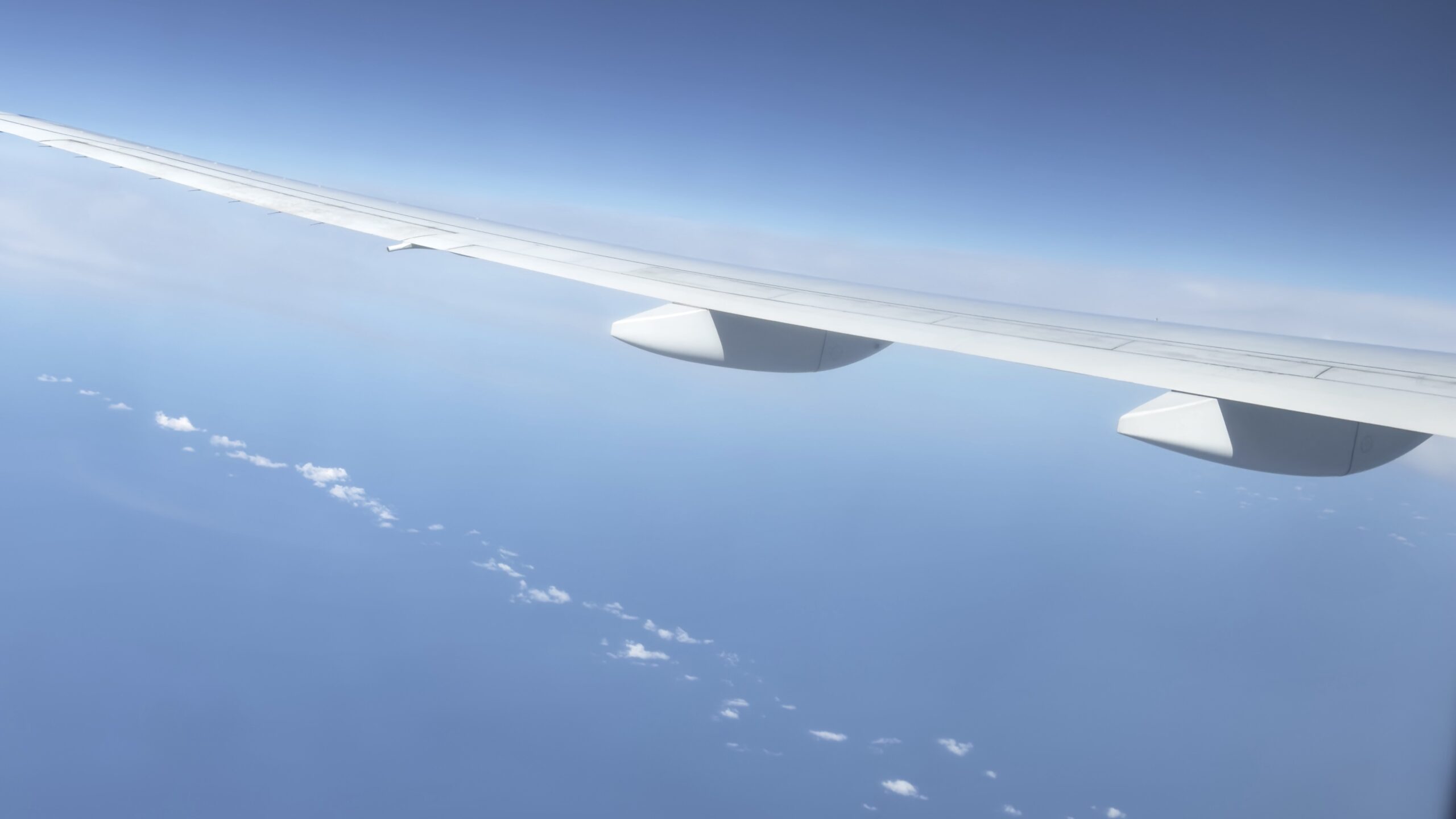
Watching airplane wings bend during turbulence can look terrifying. For many nervous flyers, it is one of the most alarming things they see during a flight.
The wingtip rises and falls. The wing bends like a thin sheet of metal.
The entire structure appears to flex in a way that seems completely unnatural. For a moment, it can genuinely look as though it is about to crack.
The fear is understandable.
In everyday life, bending is usually associated with damage or, at the very least, a flimsy structure. Something that doesn’t exactly inspire confidence. A bent table leg is rarely a sign of quality design.
Add a combination of turbulence and several thousand feet of empty air beneath you, and those seemingly “flimsy” wings can suddenly start looking very untrustworthy.
And that is often where the fear expands dramatically:
Is it enough excuse for panic?
Why Your Brain Doesn't Like Moving Wings
One reason wing flex feels so alarming is that it violates our intuition.
Most people do not spend their weekends studying structural engineering, aerodynamic loads, or aircraft certification standards.
What they do know is that airplanes are heavy.
Very heavy.
So heavy that it can feel almost impossible to understand how such a massive machine stays in the air at all. Many anxious flyers even believe that if an engine fails, the airplane will immediately fall flat like a stone.
So when a giant metal wing starts moving around thousands of feet above the ground, the brain naturally begins wondering whether something has gone wrong. Which is understandable.
Seeing the very part of the airplane responsible for generating lift visibly flexing in the sky feels slightly counterintuitive.
Let’s just say this reaction is based on incomplete information.
Time to fill in the gaps.
The surprising reality is that the movement causing concern is often evidence that the wing is functioning exactly as intended.
Wings Are Designed To Flex
To begin with, the biggest misconception about airplane wings is the idea that they are supposed to remain perfectly rigid.
In reality, engineers deliberately design them to flex. Intentionally.
That may sound counterintuitive because most people associate strength with stiffness. Yet stiffness and strength are not the same thing.
- Imagine taking a dry twig and bending it. It snaps.
- Now imagine bending a fishing rod. It flexes.
Which one would you rather trust under stress?
Flexibility allows forces to be absorbed rather than resisted.
Airplane wings work in a similar way.
During flight, the wings are continuously generating lift – the upward aerodynamic force that keeps the airplane in the air.
To stay airborne, the wings must produce enough lift to support the entire weight of the aircraft. A large commercial airliner can weigh hundreds of tons, which means the wings are constantly carrying enormous loads.
This creates an interesting situation.
Passengers often imagine gravity pulling the airplane down while the engines somehow push it forward. While that is partly true, the wings are actually doing most of the heavy lifting. The engines provide thrust, but it is the wings that convert the airplane’s forward motion through the air into lift.
In simple terms, the wings are constantly being pulled in opposite directions:
Gravity pulls the aircraft down. Lift pushes the wings upward.
As a result, the wings remain under load throughout the entire flight.
In fact, if you look at an aircraft parked at the gate, the wings often appear relatively straight. Once the airplane is airborne and generating lift, the wingtips can sit noticeably higher because the wings are literally carrying the weight of the aircraft.
That upward bending is a sign that the wings are doing exactly what they were designed to do, not a sign of stress or damage.
Now let’s add turbulence into the picture.
The atmosphere is not perfectly smooth. Small changes in airflow constantly alter the amount of lift being generated across different parts of the wing. Every gust, every pocket of rising air, and every bump in the atmosphere creates forces that the structure must manage.
If the wing were completely rigid, all of those forces would transfer directly into the structure, creating significantly higher stress loads.
But, the wing moves. This flexing helps distribute loads more evenly, absorb energy, and reduce stress throughout the aircraft.
So what looks fragile from a passenger seat is often evidence of intelligent engineering. The wing is bending because it is carrying the airplane, NOT struggling to carry an airplane.
Flexibility Is A Strength
This idea appears throughout modern engineering.
Skyscrapers sway in strong winds. Bridges move under load. Sports equipment flexes during use.
The ability to move slightly under stress often makes a structure rather STRONGER than weaker. A completely rigid structure concentrates forces. A flexible structure spreads them out.
The reason flexibility is so valuable comes down to how forces behave. Imagine trying to stop a moving object instantly: the force required is enormous.
Now imagine slowing the same object down gradually over a longer distance. The force need becomes much smaller.
This principle appears everywhere in engineering:
- Car suspension systems compress when you hit a bump.
- Skyscrapers sway slightly in strong winds.
- Bridges expand, contract, and move under load.
None of these movements indicate weakness. They exist because allowing controlled movement reduces stress on the structure.
Airplane wings follow exactly the same philosophy.
A rigid wing would have to resist every gust of air, every change in lift, and every atmospheric disturbance directly. All of that energy would be concentrated into the structure itself.
A flexible wing absorbs part of the energy and spreads the load throughout the wing. The movement acts almost like a built-in shock absorber. And a way smarter tactic than fighting the forces. This significantly reduces stress concentrations, which are often where structural problems begin.
Long story short:
Structures usually fail because a force becomes concentrated in one location. Not because the force is large. Flexibility helps to prevent that.
A wing that bends is stronger than a rigid wing because it manages forces more efficiently.
How Strong Are Airplane Wings Really?
But how much is too much?
Aircraft manufacturers spend an enormous amount of time answering that question before an airplane ever carries passengers.
Before certification, aircraft wings undergo extensive structural testing. Engineers physically bend them far beyond anything they are expected to experience during normal airline operations.
Far beyond routine turbulence.
Far beyond severe turbulence.
Far beyond the conditions most passengers will ever encounter.
The purpose is simple.
The wing is not merely designed to survive ordinary flight conditions.
It is designed to survive conditions well beyond them. Commercial aviation is built around safety margins:
While constructing an airplane engineers focus on how much ADDITIONAL strength should exist BEYOUND WHAT IS NECESSARY.
The only way wing flex feels so alarming is that it violates our intuition. But it easy to fix with provided knowledge.
So this movement causing concern is the evidence that the wing is functioning exactly as intended.
Why Bigger Airplanes Seem To Have More Wing Movement
The wings on large airliners often appear to flex more than those on smaller aircraft.
Modern airliners use long, slender wings because they are more aerodynamically efficient. A longer wingspan reduces a type of drag called induced drag, allowing the aircraft to generate lift more efficiently while burning less fuel.
The trade-off is that longer structures naturally display more visible movement. Just like a long ruler bends more easily than a short one, a longer wingtip can move significantly even when the wing itself is experiencing perfectly normal loads. This flexibility is NOT an engineering compromise. It is the INTENTIONAL design.
Many modern aircraft also feature upward-curved wingtips known as winglets. These help reduce wingtip vortices—spirals of air that form at the ends of the wings and create drag. By reducing these vortices, winglets improve fuel efficiency, increase range, and reduce fuel consumption.
The combination of longer wings, flexible structures, and winglets often makes wing movement appear more dramatic from a passenger window.
To an engineer, however, this movement is usually evidence of a highly efficient wing doing exactly what it was designed to do.
A related fear many passengers have is whether a wing could simply bend too far and detach from the aircraft. In practice, the wing is one of the strongest parts of the airplane.
What passengers see outside the window is only a small portion of the structure. Most of the wing’s strength comes from an enormous internal framework consisting of spars, ribs, stringers, and reinforced attachment points that run deep into the fuselage. The wings are NOT “bolted onto the sides” in the way many people imagine. They are INTEGRATED into the aircraft’s primary structure and are designed to carry loads far greater than those encountered during normal operations.
Before an aircraft is certified, manufacturers perform structural tests in which the wings are bent dramatically beyond anything they would experience in service. In some tests, the wingtips are pulled several meters upward while the structure continues to hold.
This is one reason turbulence does not create concern among engineers. The loads experienced during even severe turbulence remain FAR BELOW the structural limits for which the aircraft was designed and certified.
In other words, the wing is attached through one of the strongest structural systems on the entire airplane.